
May
Yoghurt
Why Shape Matters: Increasing the profitability of fresh cheese.
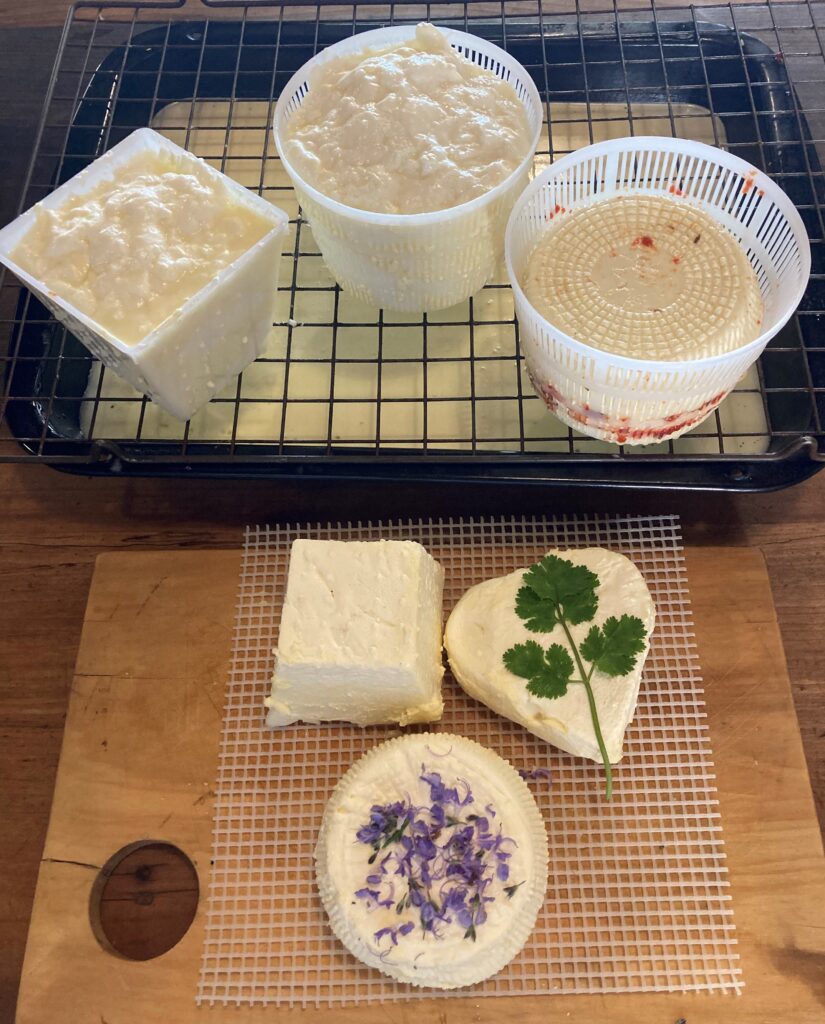
I learnt to make cheese on a goats milk farm in France where the simplist of recipes was used but with the most stunning outcomes in that the cheeses were shaped into beautiful forms such as heart, log, pyramid or small rounds. With a sprinkling of herbs or ash they became cheeses fit for the connoisseur.
Fresh cheese or what we call fromage frais or maas kaas at Finest Kind ( recipe here) is one of the easiest cheeses to make, easier than yoghurt and gives a return of 18% as compared with the hard cheeses which are between 10-12%. Yet many cheese makers here still sell soft cheese in plain tubs — missing a major opportunity to increase both perceived value and selling price. It is always important to look for the niche in cheese making as it is impossible to compete with the big cheese factories.
The difference between a spoon able tub of cheese and a beautifully shaped fresh cheese is often not the recipe. It is presentation.
A pyramid, log, heart, or small round immediately changes how customers experience the product. Instead of looking like a basic dairy item, the cheese becomes artisanal, gift-worthy, restaurant-ready, and visually beautiful. Especially if a sprinkling of herbs is added.
Using the same recipe, shaped cheeses can often command significantly higher prices per kilogram than tubbed products.
A fresh cheese sold in a standard tub may compete directly with supermarket cream cheese or cottage cheese. But once moulded into a form, the product enters an entirely different market category — specialised cheese.
Restaurants, farm stalls, delis, wine estates, and tourism outlets are especially drawn to visually distinctive cheeses because presentation matters on a cheeseboard or plated dish.
Shapes also create opportunities for product differentiation:
- ash-coated pyramids,
- herb-covered logs,
- flower-coated discs,
- black pepper chèvre rounds,
- honey-drizzled hearts,
- or olive oil marinated mini cheeses.
A Practical Packaging Method for Artisan Fresh Cheese
Here I learnt in France the little cheeses were sold in wooden crates lined with straw at the market. In South Africa we do have an increase in markets in many of our towns where the cheeses can be sold at a premium but the challenge comes when you want to sell the cheese at a supermarket. Here the packaging becomes a problem. Traditional wrapping methods can be labour-intensive and expensive for small producers.
A practical and attractive solution is using ring-lock tubs.
The cheese can be placed onto the lid, after which the clear container is placed over the cheese and clipped closed. This allows the cheese to remain visually prominent while still being protected during transport and retail display.
For producers working with fresh cheeses, surface mould can become a challenge during storage and distribution. A light application of Natamycin to the inside of the container can help suppress unwanted mould growth and extend shelf appearance.
Natamycin is widely used internationally in cheesemaking as an antifungal treatment and is particularly effective against surface yeasts and moulds. Care should always be taken to use it according to local food regulations and recommended usage levels, details available from Finest Kind.
The Psychology of Premium Cheese
Customers do not only buy flavour. They buy story, craftsmanship, and visual appeal.
A moulded fresh cheese immediately communicates:
- handmade production,
- artisan skill,
- traditional methods,
- and exclusivity.
That perception creates pricing power.
For small dairies and farm producers, shaping fresh cheese may be one of the simplest ways to increase profitability without dramatically increasing milk input or production costs.
Sometimes the difference between an ordinary dairy product and a premium artisan cheese is simply the mould it was drained in.